
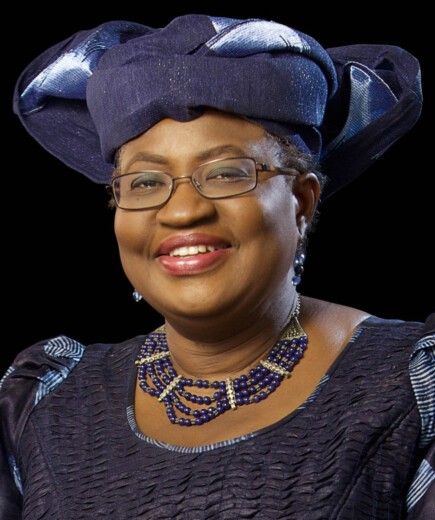

Notable Nigerians including the Director-General of the World Trade Organization, WTO, Dr. Ngozi Okonjo-Iweala; Bishop Matthew Hassan Kukah of the Catholic Diocese of Sokoto; and the Emir of Kano, His Highness Muhammadu Sanusi II, Wednesday said Nigeria’s democracy must be driven by its citizens and not political elites.
They made the remark as Enough is Enough, EiE, Nigeria marked its 15th anniversary in Lagos with the theme “Footprints & Frontlines.”
In her keynote address delivered virtually , Okonjo-Iweala, said Nigeria’s transformation would not come from political office holders but from organised civic pressure.
She declared: “Real change in our country will be pushed forward by responsible civil society organisations like EiE.”
The WTO DG praised the organisation for “15 years of standing up, showing up, and making your voices heard,” noting that EiE had succeeded in “turning youthful energy into sustained civic action.”
She recalled her 2010 speech at The Future Awards where she challenged young Nigerians to take charge of their future.
“At the time, 70 per cent of our population was under 30. I told them not to wait for permission. If young people spoke up, the rest of us would have to listen,” she said.
Okonjo-Iweala hailed EiE’s impact through campaigns like RSVP (Register, Select, Vote, Protect) and citizen-driven advocacy for basic services such as schools, electricity and healthcare.
She urged the organisation to continue empowering young Nigerians: “Help the next generation find their voice and build the Nigeria they deserve.”
In his goodwill message, Bishop Kukah applauded EiE’s courage and consistency, describing its work as a major pillar in Nigeria’s democratic journey.
He said: “You come from privilege, yet you chose service.
“This project is bigger than all of us. It is bigger than one generation. Let us remain relentless in our commitment to justice and equity.”
Also speaking, Emir Sanusi II warned that Nigeria risks deeper collapse if civil society does not remain strong and independent.
He said movements like EiE were essential to democracy, cautioning against allowing political actors to capture civic spaces.
According to him: “The nation belongs to us, not the government, not politicians.”
Sanusi criticised a political culture that prioritises personal gain over national interest:
“We have missed opportunities, sometimes deliberately. Public office is not about family or friends; it is about service to the country.
“We need a clear and achievable vision for the Nigeria we want, one different from a Nigeria manufactured through ethnic rivalry and religious division.”
The anniversary brought together leaders from business, governance, faith, media, traditional institutions and pop culture, all united in a renewed call for transparency and citizen-led accountability.
Other dignitaries at the event include former governor of Rivers State, Mr Rotimi Amaechi, a human rights activist, Prof Pat Utomi among others.