
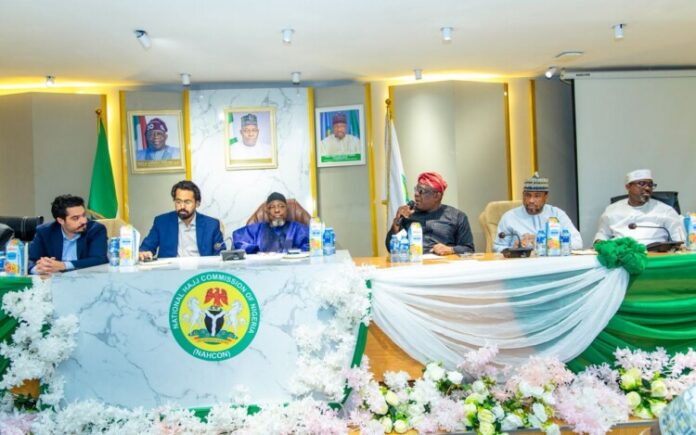

The National Hajj Commission of Nigeria (NAHCON) in continuation of engagement hosted a high-level delegation from the Kingdom of Saudi Arabia, Ministry of Hajj and Umrah, at the Hajj House, Abuja, for a strategic engagement with Hajj stakeholders, including State Pilgrims’ Welfare Boards Executive Secretaries/Chairmen and Executive Directors and Managers of Private Tour Operator Companies, aimed at strengthening coordination and improving service delivery for Nigerian pilgrims.
Welcoming the delegation, the Chairman and Chief Executive Officer of NAHCON, Professor Abdullahi Saleh Usman, described the meeting as a vital platform for direct interaction between Nigerian stakeholders and Saudi authorities.
“This engagement provides a valuable opportunity for State Pilgrims’ Welfare Boards, Tour Operators, and other stakeholders to interface directly with officials of the Ministry of Hajj and Umrah, seek clarification on policies, and jointly address operational issues affecting Hajj and Umrah,” Professor Saleh Usman said.
The Saudi delegation commended Nigeria’s improved compliance with Umrah regulations, citing a significant reduction in overstay cases and Nigeria’s reclassification as a low-risk Umrah country. They also acknowledged the steady growth in Nigeria’s Umrah participation, which has increased from about 25,000 to over 75,000 pilgrims annually.
Presenting an operational briefing, the Commissioner for Operations, Prince Anofiu Elegushi, highlighted key challenges confronting stakeholders, particularly Hajj quota reduction, visa unpredictability, accommodation availability, transportation, and Mashair services.
“Thousands of Nigerians who have paid in full are still unable to perform Hajj due to inadequate slots, and this remains our most pressing challenge,” Elegushi stated.
READ ALSO: Lassa fever claims two lives in Benue as cases rise to nine
Tinubu approves oil drilling at Tongeji Island — Gov Abiodun
In response, the Saudi Ministry assured participants that Nigeria’s request for a review of its Hajj quota would be escalated to higher authorities. The delegation also clarified that the Business-to-Business (B2B) Umrah model remains the primary operational framework for Nigerian tour operators, emphasizing that the B2C platform does not replace existing structures.
Both sides noted improvements in service standards, including better accommodation, upgraded bedding, enhanced catering, and strengthened transportation systems. Tour operators were advised to submit documented claims for refunds and unutilized funds through established reconciliation channels.
The engagement concluded with a vote of thanks by the Commissioner for Planning, Policy, Management and Finance (PPMF), Prince Aliu Abdul-Razak expressed appreciation to the Saudi delegation for their time, openness, and commitment to addressing stakeholders’ concerns, while reaffirming NAHCON’s readiness to comply with agreed guidelines and sustain continuous engagement.
Participants were also invited to attend the Umrah and Ziyarah Forum scheduled to hold in Madinah on 30 March, further reinforcing collaboration between Nigeria and the Kingdom of Saudi Arabia.
The meeting was attended by NAHCON Commissioners, management staff, Hajj stakeholders, and members of the media.