
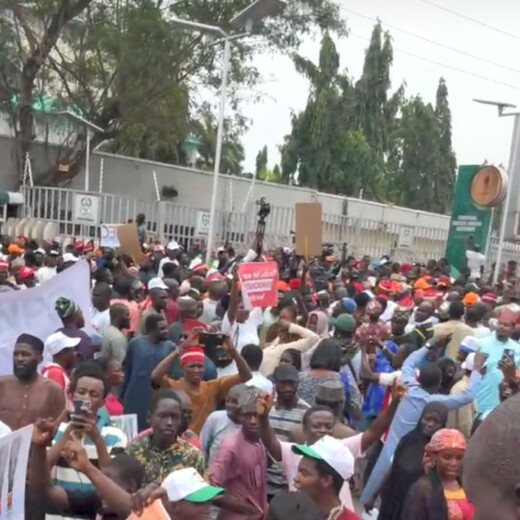

The Rain did little to dampen the determination of the crowd that surged toward the headquarters of Nigeria’s Independent National Electoral Commission (INEC) in Abuja. What began as a faction-led protest by members of the African Democratic Congress (ADC) quickly transformed into a sweeping demonstration, drawing people from across political divides and regions of the country.
By mid-morning, the protest had become a symbol of rising discontent ahead of the 2027 elections. Participants, some travelling long distances, marched shoulder to shoulder, united by a shared demand for electoral accountability and a stronger defense of democracy.
The day carried a personal touch as well. Protesters first gathered at the home of former Senate President David Mark, where a service marked his 78th birthday. From there, the crowd moved in a coordinated march through Apo Legislative Quarters, swelling as more joined along the way, eventually taking over major roads leading to INEC’s headquarters.
Among the demonstrators were prominent political figures: David Mark himself, Rauf Aregbesola, Peter Obi, Rabiu Kwankwaso, and Dino Melaye. Their presence lent weight to the protest, signaling that frustration with Nigeria’s electoral system was not confined to one party or faction.
Despite heavy rain, the atmosphere remained intense yet orderly. The protest had originally been scheduled for the previous week but was called off due to heavy security deployment. This time, however, the march appeared more spontaneous, catching authorities off guard.
As the crowd grew outside INEC’s gates, the scene reflected more than just a political rally. It was a human story of citizens braving the elements, crossing divides, and demanding that their voices be heard in shaping the future of Nigeria’s democracy.
Protesters speak
For Kareem Bello, who travelled from Kwara State, the protest was about more than party politics. “I came because the system affects all of us. Whether you’re ADC, Labour, PDP, or APC, we all want elections we can trust,” he explained, his clothes soaked but his voice steady.
Others carried their own stories into the march. A young woman named Hauwa, who said she had never missed voting since turning 18, described her disappointment: “Each time, I hope my vote will count. But the doubts keep growing. That’s why I’m here, even in the rain.”