
ABUJA — AGAINST the lamentations by air travelers over what they described as outrageous airfare in the country, the Federal Government on Wednesday said it lacked the legal authority to regulate or fix domestic airfares as the aviation sector has been fully deregulated for decades.
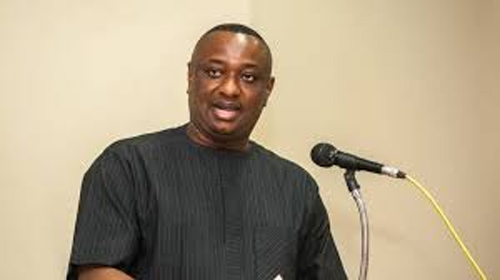
Minister of Aviation and Aerospace Development, Festus Keyamo, SAN, stated this while briefing State House correspondents at the end of the Federal Executive Council, FEC, meeting, presided by President Bola Tinubu, at the Council Chambers, Presidential Villa, Abuja.
The Minister explained that deregulation dates back to the administration of former military president, Ibrahim Babangida, when private airlines were first granted freedom to operate and set their own ticket prices.
He also said that the country’s aviation sector is one of the best in Africa.
READ ALSO: I’m upset over ₦4trn debts owed to over 2000 contractors — Tinubu *Sets up panel to clear debts
Reps order suspension of COVID-19 loan deductions *Seek waivers for vulnerable Nigerians
COAS hails troops for restoring democracy in Benin Republic
He confirmed that he had been invited by the Senate over rising airfares, but said he could not attend the session due to his presentations before the Council. He noted that he instructed the Nigerian Civil Aviation Authority (NCAA) and domestic airlines to honour the invitation in his stead.
According to him: “Government has absolutely no powers to fix prices for private enterprises. That is what deregulation means. But that does not mean we are leaving the airlines without engagement.”
Keyamo said operators continue to grapple with several cost drivers, including limited access to aircraft, unfavourable lease arrangements, lack of local maintenance facilities, and the persistent need for foreign exchange to conduct mandatory C-checks abroad—factors which ultimately reflect in ticket pricing.
He explained that one of the most significant developments under the Tinubu administration is the return of a major international aircraft lessor to the Nigerian market after nearly two decades, granting a dry lease to a local carrier at a rate three times cheaper than previous offers.
The minister attributed the breakthrough to recent reforms and new practice directions under the Cape Town Convention that have boosted investor confidence.
“With cheaper dry leases coming in, more airlines will have access to aircraft. More aircraft automatically means stronger competition. And competition is what brings prices down in any free economy,” he said, adding that passengers should begin to see the impact of increased fleet capacity within the next few months to a year.
On multiple taxes and charges—an issue recently flagged by ECOWAS—Keyamo confirmed Nigeria had received a regional advisory urging relief for operators. However, he noted that taxation falls outside the jurisdiction of his ministry.
“I cannot wake up one morning and abolish taxes. These revenues go into the Federation Account. The Finance Minister, the tax authorities, and other stakeholders must all be at the table,” he said.
Keyamo disclosed that he had already escalated operators’ concerns to the relevant authorities and that discussions were ongoing, stating that while government remains committed to easing industry challenges, it must also safeguard the revenue needed to maintain critical aviation infrastructure.