
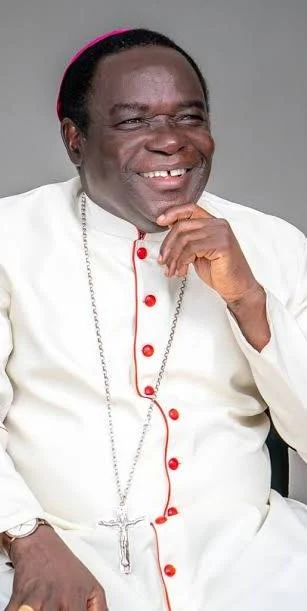

SOKOTO:- The Catholic Bishop of Sokoto Diocese, Matthew Hassan Kukah, has delivered a deeply reflective Easter message urging Nigerians and their leaders to confront the country’s worsening insecurity, broken political promises and social despair, warning that the nation is trapped in “endless turbulence” that threatens its future.
In his Easter Message for 2026 titled “Faith and Hope in Times of Turbulence,” the outspoken cleric drew a vivid comparison between Nigeria’s leadership challenges and the calm assurances given by airline pilots during turbulent flights.
“I just love pilots,” Kukah said. “Not just their impeccably smart attire, but Every leader needs a way to assure citizens that they are in charge even in the midst of turbulence.”
He noted that while pilots reassure passengers during difficult flights, Nigerian citizens are still waiting for similar confidence and direction from those steering the nation.
Nigeria’s “Endless Turbulence”
The bishop lamented that Nigeria’s challenges ranging from insecurity to poverty and governance failures have persisted for decades, leaving citizens exhausted and uncertain about the future.
“Turbulence is Nigeria’s surname,” he declared. “A nation founded in the turbulence of colonialism sank deeper into self generated turbulence by the local elites.”
According to him, even by African standards, the scale of the country’s challenges has become alarming and unacceptable.
“Citizens are in a state of stupor from sheer exhaustion,” Kukah said, questioning whether the country’s repeated crises stem from poor leadership decisions, weak institutions or failure to properly navigate national priorities.
Kukah painted a grim picture of Nigeria’s security crisis, saying years of insurgency, banditry and communal violence have turned the nation into what he described as a humanitarian emergency zone.
“After more than 20 years and well over 20,000 corpses, uncountable injured persons and millions of displaced citizens, the grim harvester still roams freely across the country,” he said.
The bishop warned that persistent violence has eroded public trust in state institutions and created a dangerous “war economy” in which conflict itself has become a means of survival for many actors.
“What started as an effort to rescue the country from a rag tag army of insurgents has deteriorated into the greatest threat to the existential fate of our country,” he said.
He further warned that prolonged insecurity has forced some desperate citizens into collaboration with criminal groups.
“Years of fatigue have lured ordinary citizens into the treacherous embrace , Some of our own children and community members now act as informants, leading security agents and innocent citizens into danger,” Kukah lamented.
The cleric criticised Nigeria’s political elite for failing to fulfil promises made to citizens, describing the nation’s development agenda as riddled with “unredeemed promissory notes.”
Referencing the historic civil rights speech by Martin Luther King Jr., Kukah said Nigerians continue to receive “cheques returned for insufficient funds” in terms of leadership commitments.
“The Nigerian political elite must reverse itself and focus on building a welfare state that is morally inclusive,” he said.
According to him, food distribution programmes alone cannot substitute for long-term economic policies capable of ending hunger and unemployment.
“Merely distributing food is an admission of failure to develop robust agricultural plans.
Unemployment is smothering the dreams of young people in the cradle of their hope,” he added.
While acknowledging the responsibility of leaders, Kukah also urged ordinary citizens to play a role in rebuilding the nation, warning against despair and passivity.
“It is tempting to blame only leaders, but each of us must ask what role we can play,” he said, stressing that individuals can make meaningful contributions even in moments of national crisis.
Drawing from biblical examples, he urged Nigerians to embrace responsibility, compassion and solidarity in the face of hardship.
“The future of our nation hangs in the balance,” Kukah warned. “But God has not given us a spirit of fear.”
Despite the grim assessment, the bishop called on Christians to remain steadfast in faith, emphasising that Easter represents triumph over suffering and death.
“Christians must face the turbulence of the moment with the assurance that God has a purpose,” he said.
He stressed that while self-defence and community vigilance may be necessary, violence cannot ultimately bring peace.
“We may be struck down, but we cannot be destroyed,” Kukah said, urging Nigerians to seek reconciliation, justice and moral courage.
Ending his message with a call for prayer and collective responsibility, the bishop expressed hope that the nation’s deep wounds could still heal.
“Our land will not heal by the size of our armies or the power of our guns,” he said. “Our walls created by war, fear and hatred will fall if we combine faith with action.”
He concluded by wishing Christians across Nigeria a peaceful celebration.
“A happy Easter to you all, and blessings upon our dear country.”