

The Conference of Islamic Organisations (CIO) has dismissed claims circulating in parts of South-West Nigeria that Muslims in the region should observe Ramadan differently from their counterparts in the North, describing such insinuations as mischief and baseless talk.
Speaking at the organisation’s Pre-Ramadan Lecture held on Tuesday, February 10, 2026, at the Beleke Smith Mosque, Surulere, Lagos, the Grand Mufti of the CIO, Shaikh Zikrullah Shaffi, reaffirmed that Muslims across the South-West would follow the Ramadan moon sighting as announced by the Sultan of Sokoto, Alhaji Muhammad Sa’ad Abubakar, CFR, mni.
“There will be no commencement of fasting except with the sighting of the new moon of Ramadan,” Shaffi declared. “The moon sighting announced by our father, the Sultan of Sokoto, is what we and all Islamic clerics across the South-West will follow.”
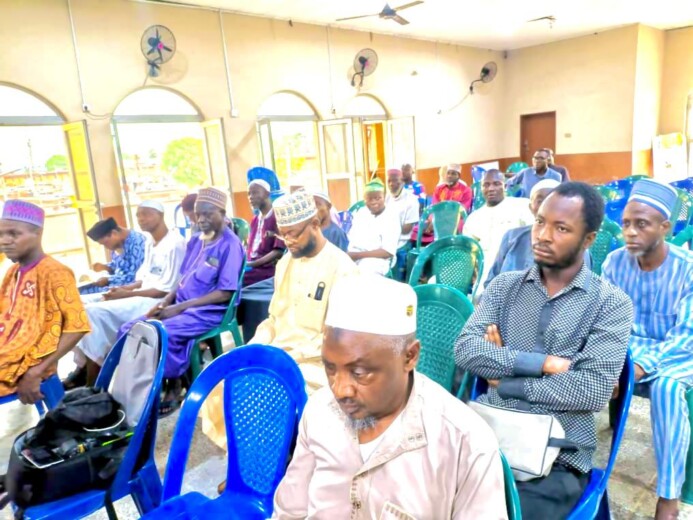
The well-attended event brought together leaders and representatives of various Islamic organisations. More than 10 prominent scholars spoke in unison, stressing that Muslims in Nigeria—North and South—remain one under the Shari’ah and are united under the religious leadership of the Sultan of Sokoto, who is also President-General of the Nigerian Supreme Council for Islamic Affairs (NSCIA).
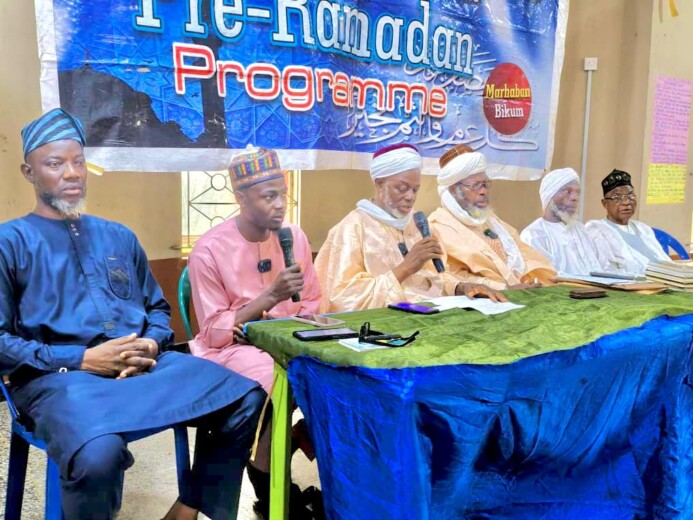
Ramadan as Mercy
Delivering the first lecture, Sheikh Isa Siddiq described Ramadan as a mercy to mankind, as taught by Prophet Muhammad (peace be upon him). He explained that fasting nurtures taqwa (God-consciousness), which ultimately leads to Paradise.
Quoting Qur’an 2:183—“O you who have believed, decreed upon you is fasting as it was decreed upon those before you that you may become righteous”—Sadiq said fasting suppresses sinful urges and discourages indecent acts such as fornication and gluttony.
He added that fasting serves as a shield against evil. According to him, a Muslim who observes fasting properly—waking for sahur, praying, reciting the Qur’an, and making supplications at iftar—seeks Allah’s protection and is shielded from harm.
Sadiq also highlighted charity as a key source of mercy during Ramadan. “Human beings are Allah’s responsibility, and whoever spends on them helps fulfill part of that responsibility,” he said, urging Muslims to care for the poor, widows, the sick, and support the upkeep of mosques. He further noted that Ramadan builds character and strengthens the habit of doing good.
Rules Guiding Ramadan Fasting
In his lecture, Shaikh Shaffi outlined the Islamic guidelines for determining the start and end of Ramadan, citing a hadith of the Prophet Muhammad (peace be upon him): “Start fasting when you sight the moon and stop when you sight it; if it is not visible, then complete the count of thirty days.”
He explained that Islamic scholars, based on the Qur’an and Sunnah, have resolved that fasting must be tied to the physical sighting of the moon, which forms part of Islamic law.
Providing this year’s projection, Shaffi noted that the 29th of Sha’aban would fall on Tuesday, February 17, 2026. If the moon is sighted that night, Ramadan would begin on Wednesday, February 18. If not, the month of Sha’aban would complete 30 days, and fasting would commence on Thursday. He described the 29th day as yaum al-shakk (the day of uncertainty).
He emphasized that the CIO and its affiliates would adhere strictly to the Sultan’s official announcement. “When you return to your mosques, make it clear that the moon sighting announced by the Sultan of Sokoto is what we shall use to start and end our fasting,” he told CIO leaders.
Unity of the Ummah
Shaffi also relayed goodwill messages from key Islamic leaders in the South-West. The Grand Chief Imam of Lagos, Shaikh (Engr.) Sulaimon Oluwatoyin Abou-Nolla, had urged Muslims in Lagos to prepare for Ramadan and to await the Sultan’s announcement before commencing fasting. He also invited worshippers to observe Tarawih prayers throughout Ramadan at the Lagos Central Mosque.
Similarly, the Grand Chief Imam of Oyo Kingdom, Sheikh Bilal Husayn Akinola Akeugberu, affirmed that Muslims in Oyo State would follow the Sultan’s declaration in line with Islamic teachings.
Addressing claims that the South should have a separate religious leadership or fasting date, Shaffi described such arguments as divisive and unfounded.
“Go and read the books of Islam,” he said. “We are one Muslim Ummah. The Sultan of Sokoto is our leader in religious matters, and he is the leader we will continue to follow.”
He added that any past misunderstandings between ethnic groups had been resolved, noting the Sultan’s nationwide efforts to foster unity.
Dignitaries in Attendance
Among those present were Imam (Engr.) Luqman Balogun, Secretary-General of the CIO; Ustadh AbdulRasheed Sulaiman, Principal of Ma’hadu Dawatus-Salam; Shaikh Isa Siddiq, Director of the same institution; Shaikh Haka Zalika; Alhaji Abdullah Afolabi; Shaikh Miqdad Daud; Imam Eyiowuawi, Chief Imam of Obanikoro Central Mosque, Kosofe; and Shaikh Murthadoh Salaudeen.
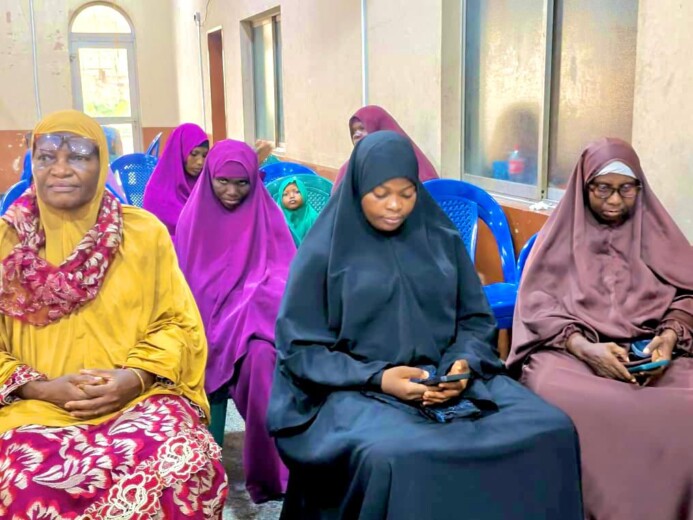
Notable Muslim women leaders in attendance included Hajia Fauziyah, Hajia Tawakalt Agoro, and Alhaja Ganiyat Gbadamosi.
The event concluded with prayers for peace, unity, and a spiritually fulfilling Ramadan for Muslims across Nigeria.